Concrete Steps & Stairs
Custom concrete steps and stair construction for safe and attractive access at your Florence-Graham home or business.
Safe and Durable Concrete Steps
Concrete steps provide safe access to entryways, decks, patios, and different elevations around your property. Well-built steps are essential for safety, accessibility, and curb appeal. Whether you need a simple two-step entrance, a grand staircase to your front door, or commercial stairs with handrails, concrete offers the strength and durability to handle constant foot traffic in all weather conditions. Properly designed and constructed stairs eliminate trip hazards and meet building code requirements for rise, run, and safety features.
Concrete stairs last decades longer than wood or metal steps with minimal maintenance. They do not rot, rust, or require painting. The surface can be finished to match your existing concrete or enhanced with decorative treatments like stamping, staining, or exposed aggregate. Railings and lighting can be integrated into the design for added safety and visual appeal. For properties in Florence-Graham with sloped yards or raised entries, quality concrete steps are both a practical necessity and an architectural feature that adds value.
We design and build custom concrete steps for residential and commercial properties. From simple utility steps to elaborate feature staircases, we deliver safe, code-compliant construction that enhances your property. Check out all our concrete services to see how we can improve your property access and appearance.
Stair Design and Building Code Requirements
Building safe stairs requires following specific design rules and building codes. These standards exist to prevent accidents and ensure stairs are comfortable to use. Here are the key elements we consider in every stair project.
Rise and Run Dimensions
The rise is the vertical height of each step, typically seven to eight inches. The run is the horizontal depth of each tread, usually ten to eleven inches. These dimensions must be consistent throughout the entire staircase to prevent tripping. Building codes specify maximum and minimum dimensions that we follow carefully. The combination of rise and run affects how comfortable and safe the stairs feel. Steps that are too steep or too shallow are tiring and dangerous to use.
Width and Landing Requirements
Stairs must be wide enough for safe passage, typically 36 inches minimum for residential and wider for commercial applications. Landings at the top and bottom provide level areas for starting and stopping. Codes require landings to be at least as wide as the stairs and deep enough to allow doors to swing freely. Longer staircases may need intermediate landings to provide rest areas and reduce the risk of long falls. We size stairs and landings appropriately for the intended use and code requirements.
Handrails and Guardrails
Handrails are required for stairs with more than three risers. They must be installed at a specific height, typically 34 to 38 inches above the tread nosing. Guardrails prevent falls from the open sides of stairs and landings. We coordinate with licensed contractors for handrail installation or can embed anchors in the concrete for future rail attachment. Proper railings are critical for safety and are checked during building inspections.
Surface Finish and Traction
Outdoor steps need slip-resistant surfaces to prevent falls in wet conditions. Broom finishes, exposed aggregate, or textured stamps provide good traction. Step nosings can be rounded or have metal tread inserts for extra grip. The finish should balance safety with appearance and be appropriate for the location and expected traffic. We recommend finishes that meet safety needs while complementing your property aesthetic.
Our Concrete Stair Construction Process
Building concrete stairs requires precision and experience. Here is how we approach every stair project to ensure quality results that meet code and exceed expectations.
- Site Measurement and Design: We measure the total rise from bottom to top and calculate the number of steps needed. We discuss width, railings, and finish options with you.
- Foundation Preparation: A solid footing is poured below the frost line to support the stair structure. Proper foundation prevents settling and cracking.
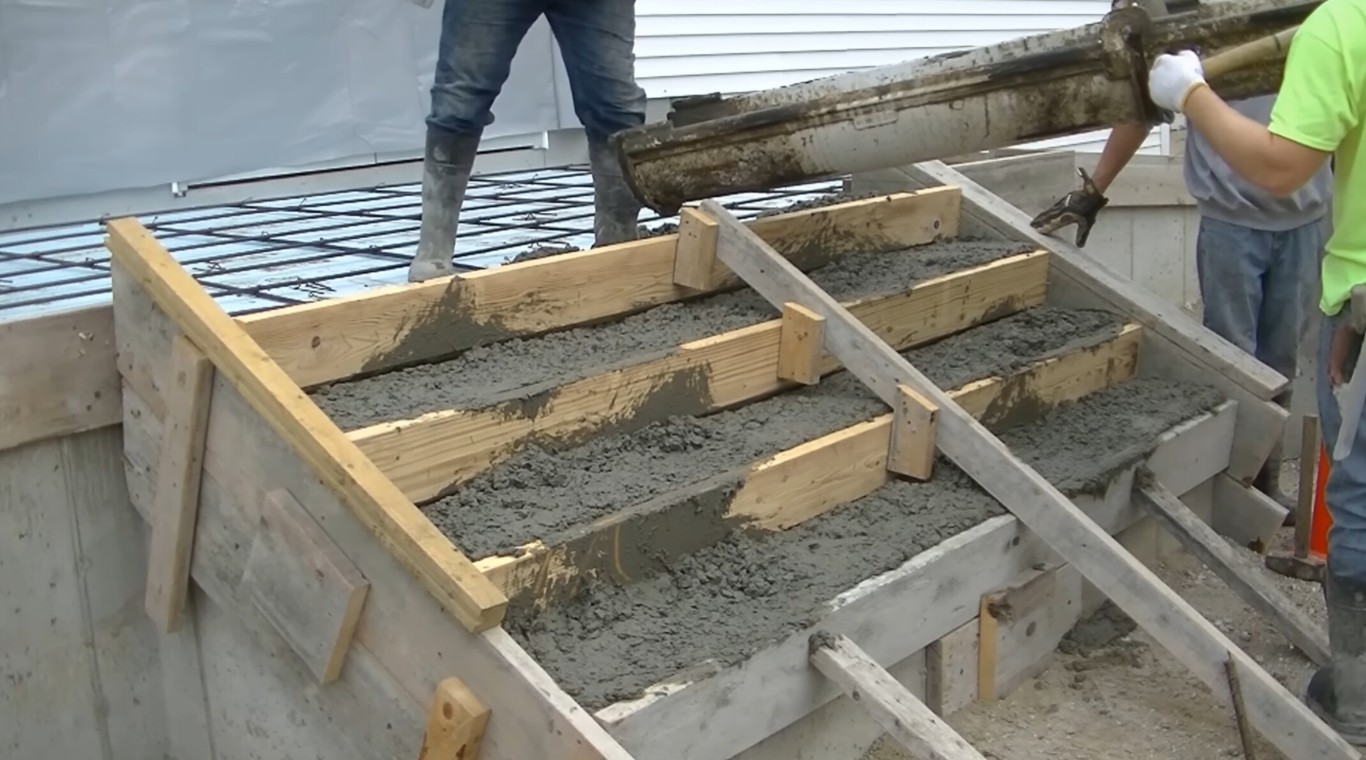
- Formwork Construction: Wooden forms are built to shape each step. This is the most critical phase because the forms determine the final dimensions and appearance.
- Reinforcement Installation: Rebar is placed throughout the stair structure to add strength and prevent cracking. Stairs experience significant stress and need proper reinforcement.
- Concrete Placement: High-quality concrete is poured into the forms and worked carefully to eliminate air pockets. Each tread is finished to the specified texture.
- Curing and Form Removal: The concrete cures for several days before forms are removed. We inspect the stairs and repair any minor surface imperfections.
- Finishing Touches: Sealer is applied if specified. Handrail anchors or posts are installed. The area is cleaned and ready for use.
Our attention to detail ensures your stairs are built right the first time. We obtain necessary permits and coordinate inspections to ensure code compliance. For related concrete work like walkways that connect to your stairs, see our sidewalk and walkway services.
Types of Concrete Steps We Build
Different situations call for different stair designs. We build all types of concrete steps to match your property needs and architectural style.
- Entry Steps: Simple straight stairs from ground level to raised porches, doors, or decks. These are the most common type we build for residential properties.
- Porch and Deck Stairs: Wider stairs with landings that provide welcoming access to covered porches or raised decks. These stairs become focal points of the front facade.
- Basement Entrance Stairs: Enclosed or open stairs providing access to basement apartments or utility areas. These often require retaining walls on the sides.
- Garden and Landscape Steps: Steps that wind through sloped landscapes or connect terraced areas. These can be informal and integrated into plantings.
- Commercial Stairs: Wide stairs with code-required handrails for storefronts, office buildings, and public facilities. These must meet stricter accessibility and safety standards.
- Curved and Custom Stairs: Radius steps, pie-shaped treads, and custom configurations for unique architectural designs.
We can incorporate decorative finishes, colored concrete, or stamped patterns to enhance the appearance of any stair type. For decorative options, explore our stamped and decorative concrete services.